
Fight Club is not polite. It does not knock. It kicks the door. Then it laughs. This movie feels dirty and smart at once. Like a joke told in a dark alley.
The plot looks simple. A bored man. A soap maker. A lot of punching. That is a lie. Under the bruises lives a rant about jobs, ads, and empty lives. The film hates comfort. It mocks men who buy meaning. It whispers that rebellion can rot.
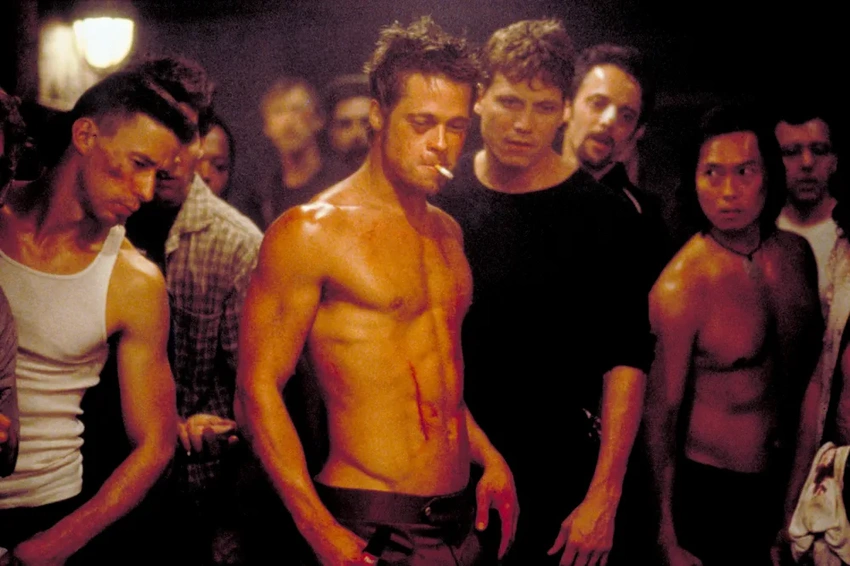
Brad Pitt is pure chaos. He smirks. He flexes. He burns everything down. His energy powers the film like stolen electricity. Edward Norton panics quietly. Together they feel unstable. On purpose. The direction is sharp. The cuts hit hard. The music pounds your ribs. Every frame feels angry. Also funny. The jokes hurt. The jokes land. You laugh. Then you worry.
And yes. The twist. It lands like a brick. You may see it coming. You may not. Either way it rewires the movie. It turns fights into clues. It turns madness into message.
Fight Club became cult cinema because it dares you. It dares you to think. It dares you to hate it. It dares you to quote it anyway. The rules are broken. The message is messy. The vibe is unforgettable.
It also hides messages in plain sight. Frames flash. Logos mock you. Violence becomes language. Consumer dreams collapse. Masculinity looks lost. The film judges everyone, including itself. That tension keeps it alive. Years later it still feels dangerous. Not because of fights, but because of ideas that refuse to behave or sit quietly. It rewards rewatches. Details grow louder. Meanings shift. Chaos sharpens focus. You leave amused, bruised, and oddly thoughtful. It challenges comfort again and again. That is the punch. And it lasts forever here. In your head.
