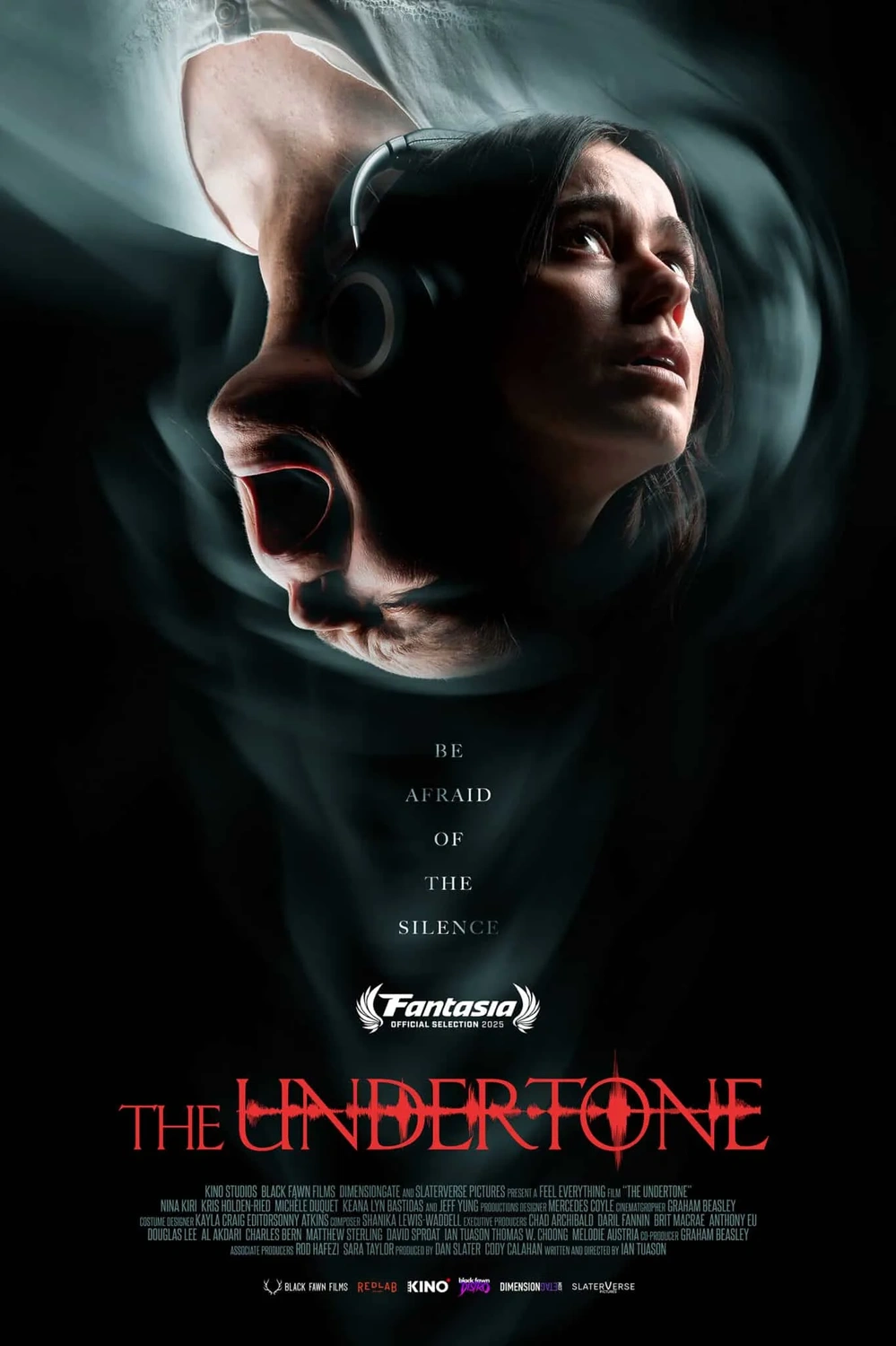

There is something quietly unnerving about a horror film that refuses to show you anything. Not in the usual restrained, “less is more” sense, but in a more radical withdrawal of the visual altogether. Undertone works in that unsettling register. It is a film that insists horror is not what we see, but what we hear and, more dangerously, what we imagine.
Directed by Ian Tuason, this A24-backed debut feels less like a conventional film and more like an experiment in sensory deprivation. And yet, it is precisely this limitation that becomes its most generative force.
Domesticity as Haunting
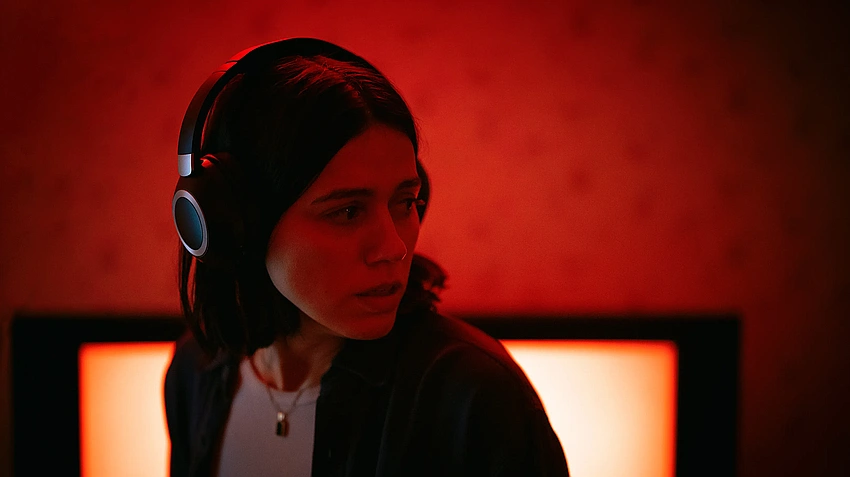
At its surface, Undertone is deceptively simple. Evy, played by Nina Kiri, is a paranormal podcast host who returns home to care for her dying mother. Her scepticism is set against the belief of her co-host Justin, voiced by Adam DiMarco. This dynamic initially feels familiar, almost procedural.
But the film’s central disturbance arrives through a series of audio recordings sent to Evy. These recordings document another couple’s apparent haunting, one that begins to mirror Evy’s own situation with uncanny precision.
The domestic space here is not merely a setting. It is a site of decay, obligation, and slow psychic erosion. Caregiving becomes inseparable from haunting. The home, traditionally a space of intimacy, is recoded as an acoustic chamber of dread.
A Cinema of Sound, Not Sight
What distinguishes Undertone most radically is its formal structure. With the exception of Evy and her mother, almost all characters exist only as voices. This is not a gimmick. It is the organising principle of the film’s horror.
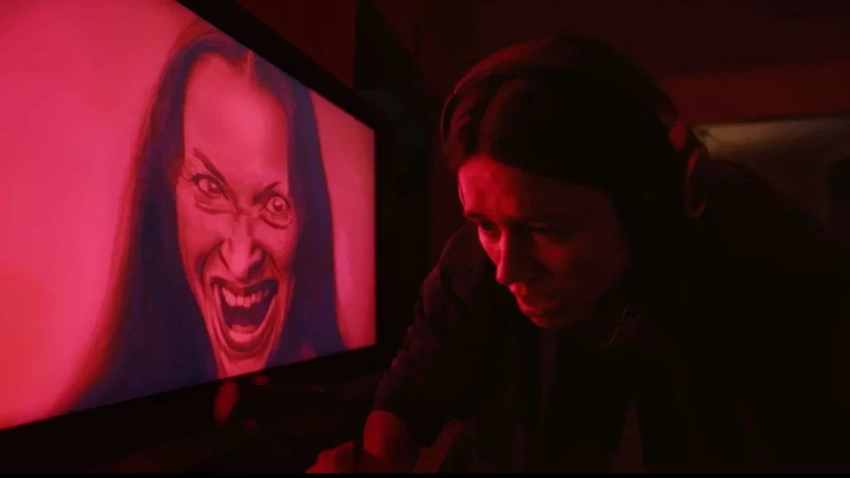
The film belongs to what might be called “found audio” horror. It borrows from the logic of found footage, but replaces the visual archive with an auditory one. In doing so, it destabilises the hierarchy of the senses that cinema typically relies on.
Sound here is not supplementary. It is sovereign.
Critics have noted how the film uses negative space and unsettling audio to construct dread, often leaving the most disturbing events entirely off-screen. This creates a peculiar phenomenological effect. The viewer is no longer a passive recipient of images but an active participant, compelled to “complete” the horror internally.
In other words, Undertone weaponises imagination.
Grief, Guilt, and the Collapse of Boundaries
Beneath its formal experimentation, the film is anchored in a more recognisable emotional terrain. Grief. Specifically, anticipatory grief. The kind that arrives before death but after certainty.
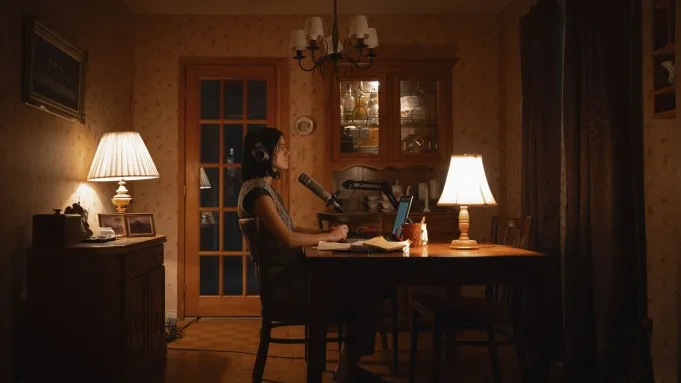
Tuason’s inspiration reportedly draws from his own experiences caring for terminally ill parents. This autobiographical trace is crucial. It explains why the film’s horror never feels entirely supernatural.
The recordings Evy receives are frightening, yes, but they are also strangely intimate. They echo her own life. Her own fears. Her own impending loss.
As one review succinctly puts it, the film collapses grief, guilt, and imagination into something indistinguishable. This collapse is where the film becomes most interesting. The question is no longer whether the haunting is real. The question is whether that distinction even matters.
Minimalism and Its Discontents
It would be dishonest to suggest that Undertone is universally successful. Its minimalism is both its strength and its limitation.
On one hand, the film’s restricted setting, small cast, and reliance on sound create an intensely focused experience. It feels intimate, almost suffocating. On the other, this same restraint risks monotony. Without visual variation, the narrative must work harder to sustain tension.
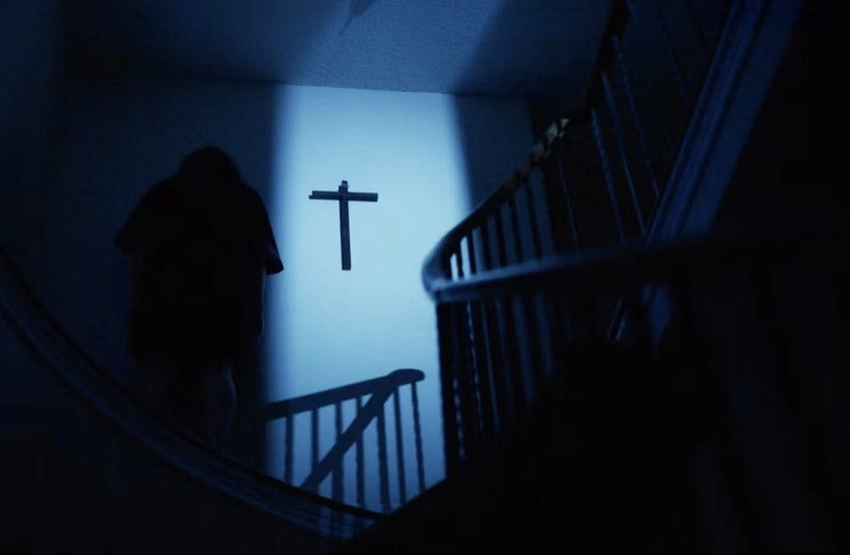
These criticisms are not unfounded. But they also miss something essential. Undertone is less concerned with narrative innovation than with sensory reorientation.
It asks not “what is new?” but “how else can we feel fear?”
The Ethics of Listening
What lingers after the film ends is not a specific image or jump scare, but a sensation. A low, persistent unease.
Part of this comes from the film’s refusal to provide closure. The audio recordings never resolve neatly. The boundaries between self and other, reality and projection, remain porous.
But there is also an ethical dimension here. To listen, in Undertone, is to become implicated. The act of listening is not neutral. It is invasive. It is consuming.
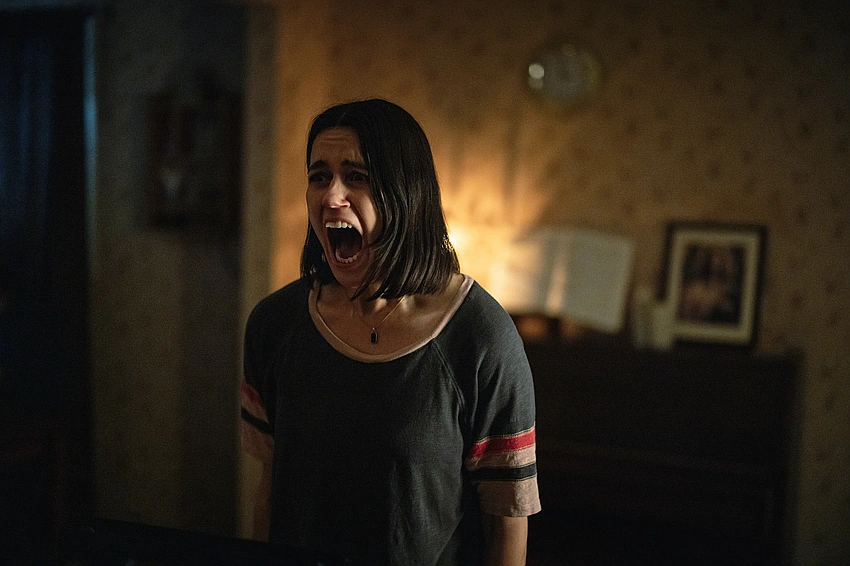
The film seems to suggest that horror is not merely something we witness. It is something we absorb.
A Film That Stays With You
Undertone is not an easy watch, nor is it designed to be. It demands patience, attention, and a willingness to sit with ambiguity.
It is, at times, frustrating. At others, deeply affecting. But it is rarely forgettable.
In an era of hyper-visual spectacle, Undertone does something quietly radical. It asks us to close our eyes, in a sense, and listen. And in that act of listening, it reveals something unsettling about the mind’s capacity to generate its own terror.
The film does not shout. It hums. And that undertone is precisely what makes it difficult to shake.
#Undertone #HorrorFilm #SoundDesign #IndieCinema #A24 #FilmReview #MovieReview
