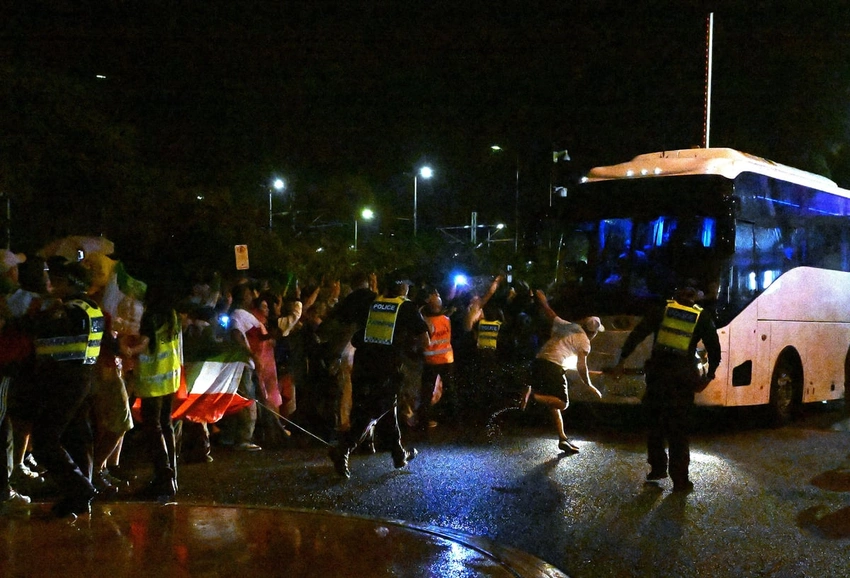

A tense afternoon on the Gold Coast unfolded as the Iranian women's football team faced a mix of praise, pressure, and fear after their Asian Cup match. Witnesses say the team appeared to signal SOS from their team bus, a stark moment that underscored concerns for their safety as they prepared to return home. The gesture came amid online vitriol that had labeled some players as wartime traitors, intensifying worries about possible retaliation once they land back in Iran.
Crowds followed the team's departure, with supporters and critics converging outside venues in a display that spiraled into protests. Reports from the scene describe a high-tension mood, with international authorities urged to step in to ensure the players can leave Australia and travel home without harm. The situation has left many amid the Asian Cup community wondering about the players’ well-being and whether asylum or safe passage should be considered as a precaution.
Public comments from the players themselves have been scarce, leaving teams, officials, and fans navigating uncertainty about the next steps. Human rights advocates have called on Australia to provide clear protection guarantees and to assess whether asylum channels should be opened for the players if they fear for their safety on return. The episode has already become a talking point about sports, politics, and the broader risks faced by athletes who challenge social norms at home, highlighting how a moment on the pitch can spill into wider questions of safety, rights, and international responsibility.
As the immediate attention shifts to onward travel and housing security in the days ahead, the core issue remains clear: ensuring the players can compete and live without fear, wherever their journeys may take them next.
