

Chloé Zhao’s Hamnet arrives with the kind of expectation that usually burdens literary adaptations, especially those drawn from novels as interior and sensorial as Maggie O’Farrell’s. Yet what is striking is not how faithfully the film translates the book, but how deliberately it resists fidelity in favour of atmosphere, gesture, and silence. The result is less an adaptation and more a meditation on absence.
The Story Everyone Knows, Told Sideways
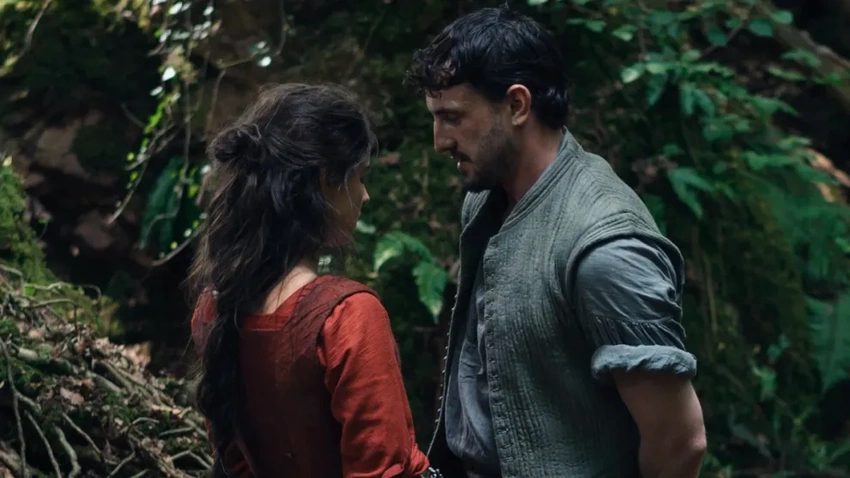
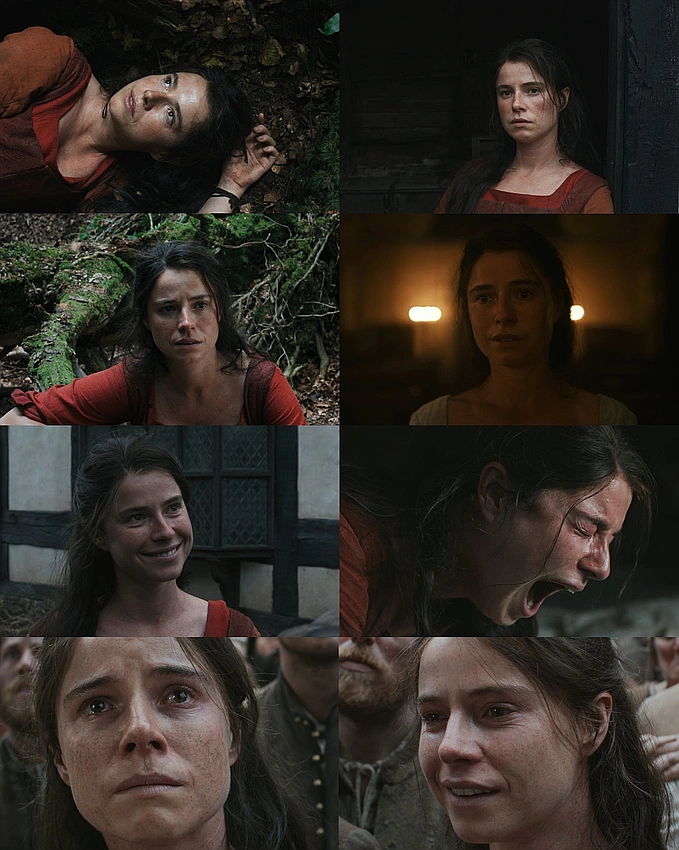
At its most skeletal level, Hamnet recounts the death of William Shakespeare’s son and the emotional afterlife of that loss. But Zhao’s film is not interested in Shakespeare as a monumental literary figure. Instead, it shifts attention to Agnes, his wife, played with startling emotional precision by Jessie Buckley.
The narrative unfolds not as a chronological tragedy but as a series of fragments. Domestic rituals, small gestures, and moments of distance accumulate into something heavier than plot. The child’s death is not staged as spectacle. It is felt through absence, through the rearrangement of space, through the quiet rupture of routine.
Agnes at the Centre
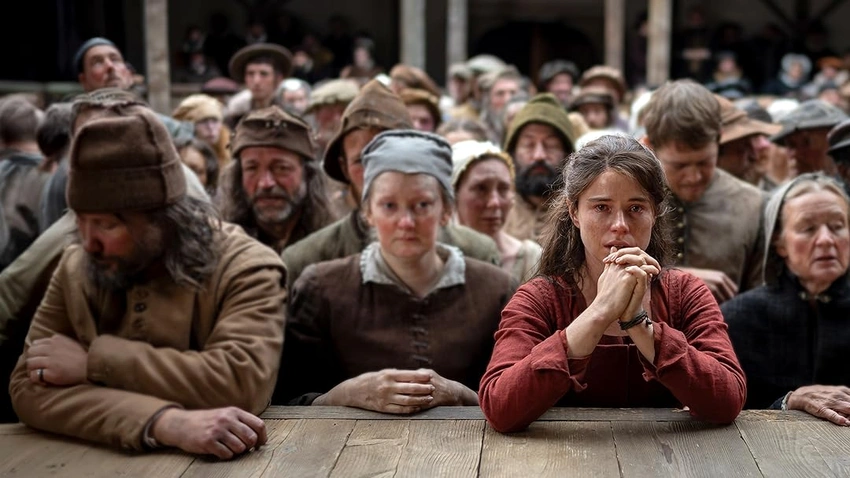
What distinguishes Hamnet from other Shakespeare-adjacent narratives is its insistence on re-centring Agnes. Historically marginal, she becomes here the emotional and epistemic core of the film. Buckley’s performance, widely recognised across awards circuits, is grounded in restraint rather than display.
Agnes is rendered as a healer, a figure attuned to the textures of the natural world, someone who reads bodies and silences with equal fluency. The film aligns itself with her perceptual field. Wind, herbs, breath, and touch become narrative devices. Even grief is experienced corporeally rather than rhetorically.
In this sense, Zhao’s direction feels deeply phenomenological. The film is less about what grief means and more about how it is lived.
Zhao’s Aesthetic: Between Epic and Intimate
Chloé Zhao’s earlier work has often oscillated between vast landscapes and intimate human stories. Hamnet continues this tendency, though here the scale is inward.
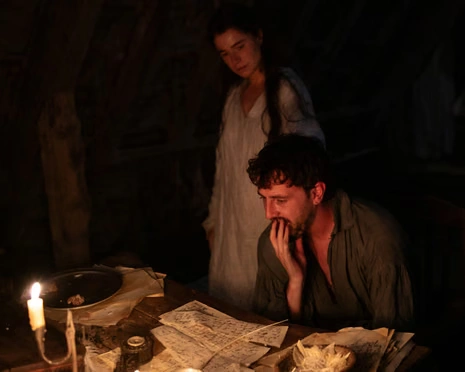
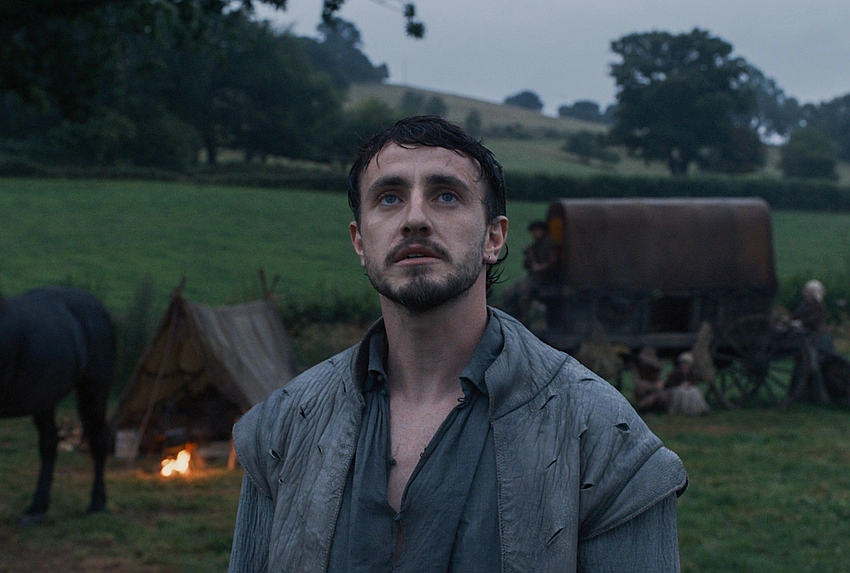
Cinematographer Łukasz Żal frames the English countryside not as pastoral escape but as an extension of Agnes’s interiority. The camera lingers on textures. Wool, wood, skin, and soil all acquire equal narrative weight.
What emerges is a kind of tactile cinema. The visual language resists the polished grandeur often associated with historical dramas. Instead, it leans towards something almost ethnographic in its attention to everyday life.
This aesthetic choice is crucial. It prevents the film from becoming a reverential period piece. Instead, it feels lived in, even when it gestures towards literary myth.
The Problem of Adaptation
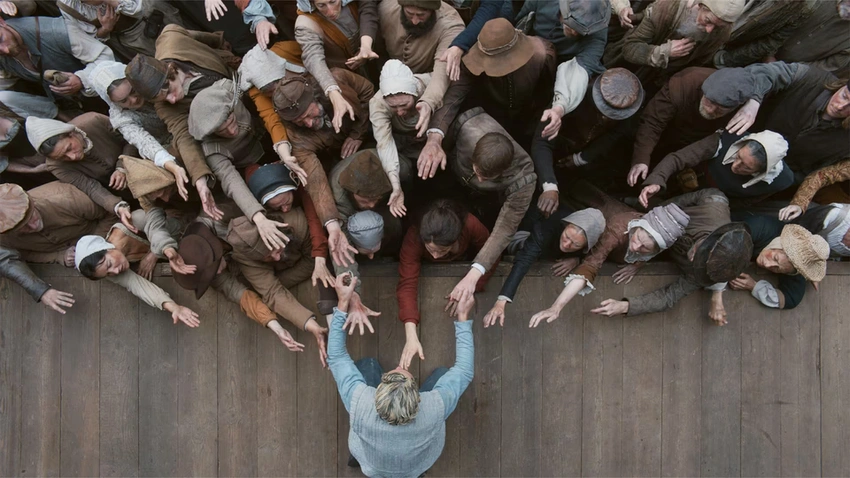
O’Farrell’s novel is famously interior, built on sensory detail and psychological depth. Translating that into cinema is not straightforward. Zhao’s solution is not to replicate the novel’s interior monologue but to externalise it through rhythm and image.
Dialogue is sparse. Meaning is carried through pauses, glances, and spatial arrangements. The distance between Agnes and William, played by Paul Mescal, is not articulated but staged. His absence, both physical and emotional, becomes one of the film’s central motifs.
In doing so, the film also reframes the relationship between life and art. Shakespeare’s creative process is not dramatised in any conventional sense. Instead, it appears obliquely, as something that emerges from grief rather than transcends it.
Grief as Form
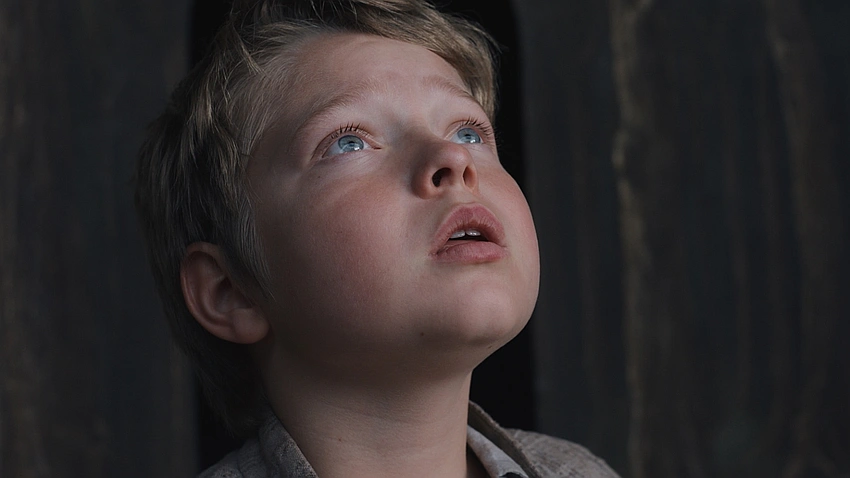
The most compelling aspect of Hamnet is how it formalises grief. The film’s structure mirrors the experience it seeks to depict. Time becomes unstable. Scenes echo each other. Certain images recur with slight variations.
This repetition is not decorative. It enacts mourning. The viewer is made to inhabit a temporality in which the past continually intrudes upon the present.
Max Richter’s score complements this approach. It does not guide emotion so much as sustain it, creating a sonic environment that feels suspended between memory and immediacy.
In this sense, Hamnet aligns itself with a broader tradition of slow cinema, where duration and stillness are used to produce affect.
The Question of Hamlet
Any story about Shakespeare’s son inevitably gestures towards Hamlet. The film acknowledges this connection but resists making it its central thesis.
Rather than presenting the play as a direct response to personal tragedy, Zhao treats it as one possible afterimage of grief. The emphasis remains on the lived experience rather than its artistic transformation.
This is a subtle but important shift. It avoids reducing the film to a biographical explanation of a canonical work. Instead, it allows both life and art to remain partially opaque to each other.
Reception and Cultural Position
Critically, Hamnet has been received with considerable acclaim, particularly for its performances and emotional restraint. It secured major festival recognition and awards attention, including multiple nominations at the Academy Awards and a Best Actress win for Buckley.
Its success is interesting in a contemporary context where literary adaptations often lean towards spectacle or simplification. Hamnet does neither. It is slow, quiet, and at times deliberately opaque. That such a film has found both critical and institutional recognition suggests a continued appetite for cinema that treats literature not as content to be translated but as a form to be rethought.
Hamnet does not offer closure. It does not resolve grief into meaning, nor does it elevate suffering into something redemptive. Instead, it stays with the unfinished. With the gestures that do not quite reach their object. With the spaces that remain after loss.
In doing so, it feels less like a film about Shakespeare and more like a film about the conditions under which literature becomes possible at all. And perhaps that is its most unsettling proposition. That art does not heal. It lingers.
#Hamnet #ChloéZhao #MaggieOFarrell #JessieBuckley #FilmReview #MovieReview #Oscars
