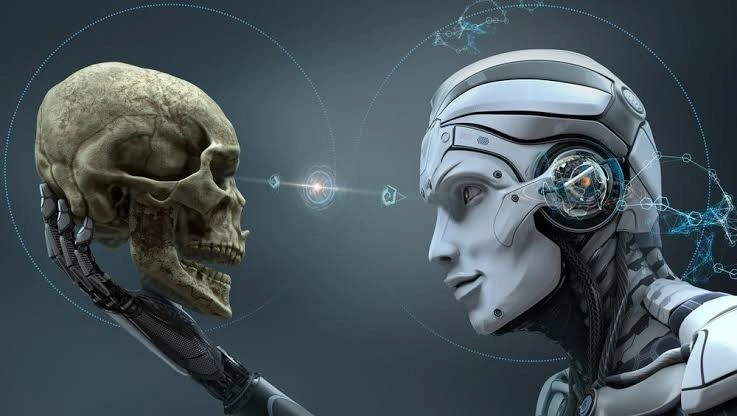

The Oracle in the Machine
Recent reports from The Independent highlight a disturbing trend where heat waves are increasingly triggering sudden, severe droughts across the globe. As the planet warms, these environmental cascades are becoming more frequent. However, we are not merely observing these phenomena; we are predicting them with increasing precision. Advanced algorithms now model these climate risks long before the ground cracks. Yet, this same predictive power is being turned inward, onto the human biology itself.
We stand on the precipice of an era where Artificial Intelligence can forecast our personal catastrophes with the same cold accuracy it applies to the weather. From the likelihood of your home becoming uninsurable due to drought risk to the probability of your brain succumbing to Alzheimer's disease decades from now, the oracle is open for business. The question remains: can we handle the truth?
The Burden of Foreknowledge
Consider the medical breakthrough of predicting Alzheimer's. While early detection offers a head start on management, it creates a new category of human experience: the pre-patient. A healthy thirty-year-old might be burdened with the mathematical certainty of cognitive decline at seventy. This knowledge fundamentally alters the intervening forty years. Every misplaced key or forgotten name ceases to be a momentary lapse and becomes a terrifying omen.
This psychological weight threatens our autonomy. If an algorithm dictates that your future holds inevitable decline, does it erode your will to strive in the present? We risk creating a society where our destiny is written in code before we have had a chance to live it. The joy of spontaneity could be replaced by a grim adherence to preventative protocols, turning life into a long waiting room for a predicted diagnosis.
The Redlining of Reality
When we merge health predictions with climate risk forecasts, the implications for privacy and social equity become dire. Insurance companies and financial institutions are hungry for this data. We are already seeing the beginnings of climate redlining, where entire neighborhoods are deemed uninsurable based on algorithmic drought and fire models.
Imagine a world where these data streams converge. A bank might deny a mortgage not just because a property sits in a heat-wave zone, but because the applicant's biological data suggests a high probability of early-onset dementia, making them a perceived credit risk. This is not science fiction. It is the logical conclusion of unchecked predictive capitalism. We risk building a caste system based not on who we are, but on what an unfeeling machine predicts we will become or endure.
The Right to an Open Future
There is a profound ethical boundary being crossed here. Human autonomy relies on the concept of an open future, the idea that our choices matter and that the script is not yet written. Predictive AI, by its nature, collapses this potential into probability. It treats human lives like weather patterns to be modeled rather than stories to be written.
We must establish rigid boundaries. Data privacy laws need to evolve beyond protecting our current status to protecting our future potential. There must be a recognized right not to know, and more importantly, a right to prevent corporations from making decisions based on probabilistic futures.
As heat waves reshape our geography and medical AI maps our biology, we must ensure that technology remains a tool for navigation, not a cage. We cannot allow the forecast to replace the journey.
