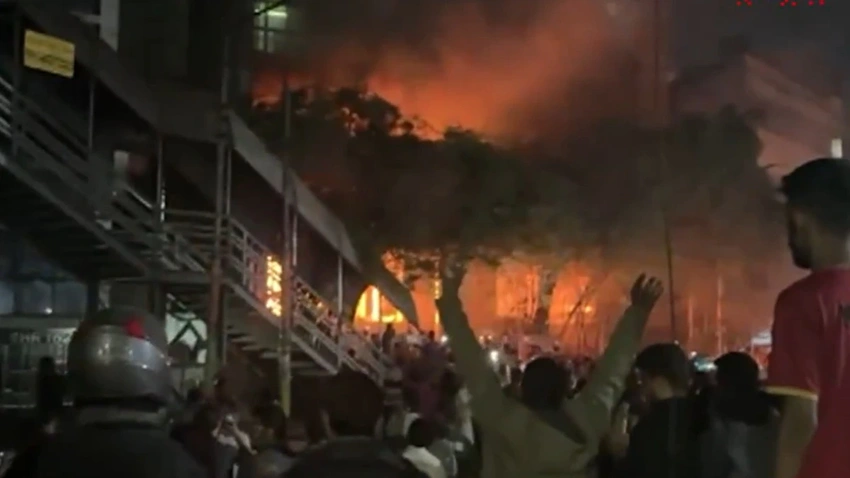

Widespread unrest has gripped Bangladesh after the death of Sharif Osman Hadi, a 32-year-old youth leader who was shot last week and died in a Singapore hospital. Thousands took to the streets in Dhaka and other cities, demanding justice for Hadi and chanting against those they accuse of enabling the attack.
Protesters blocked major roads, raised slogans seen as anti-government and anti-India, and at times targeted properties linked to the former ruling Awami League. Some groups attempted to march toward Indian diplomatic premises, prompting police action near the residence of India’s deputy high commissioner as officers used tear gas to disperse crowds.
In Rajshahi, protesters tried to march toward a regional Indian diplomat’s office but were halted by police; videos circulated showing stone pelting near the Indian assistant high commission.
Rhetoric from protest organizers has framed the death as a direct assault on Bangladesh’s pro-democracy movement, with factions like the National Citizen Party accusing authorities and India of sheltering the killers. Leaders called for action from the interim government and, in some statements, urged the closure of the Indian High Commission until the assassins are brought back.
As the demonstrations intensified, several buildings in Dhaka, including offices of major newspapers Prothom Alo and The Daily Star, were damaged or set on fire, with staff trapped inside as authorities worked to restore order. The turmoil arrives amid a broader push for accountability and political reforms, testing the government’s ability to balance security with civil liberties.
The situation remains volatile, with protesters insisting on justice for Osman Hadi and authorities pledging to maintain public safety while pursuing investigations.
