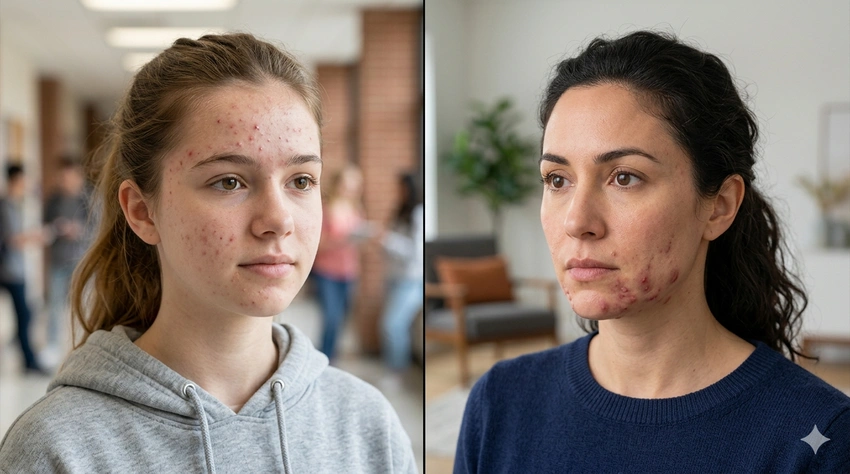

Acne is often treated as a one size fits all problem, but this assumption leads to one of the most common and expensive skincare mistakes. Teen acne and adult acne are driven by completely different biological and lifestyle factors, yet many people use the same harsh products for both. This mismatch not only delays results but can worsen skin health over time. Understanding the difference is the first step to choosing treatments that actually work and avoiding unnecessary spending on ineffective routines.
What Drives Teen Acne and Why It Is Widespread and Surface Level
Teen acne is primarily driven by hormonal surges during puberty. Increased androgen levels stimulate oil glands to produce excess sebum, which mixes with dead skin cells and clogs pores. This creates an ideal environment for acne causing bacteria to grow. Because these hormonal changes affect the entire face, teen acne tends to appear on the forehead, nose, and cheeks. It is often more widespread and visible on the surface, including blackheads, whiteheads, and inflamed pimples. The skin at this stage is usually more resilient, meaning it can tolerate stronger treatments without immediate damage.
What Drives Adult Acne and Why It Concentrates Along the Jawline and Chin
Adult acne is more complex and often linked to internal and lifestyle factors rather than just oil production. Hormonal fluctuations related to stress, menstrual cycles, or underlying imbalances play a major role. Cortisol, the stress hormone, can trigger oil production and inflammation. Unlike teen acne, adult breakouts tend to appear along the jawline, chin, and lower cheeks. This pattern is closely tied to hormonal activity. Adult skin is also thinner and more sensitive, making it prone to irritation, dryness, and slower healing. Breakouts are often deeper, more painful, and may leave marks behind.
How the Correct Treatment Approach Differs Between the Two Skin Types
Treating teen acne usually focuses on controlling oil and keeping pores clear. Ingredients like salicylic acid and benzoyl peroxide are commonly effective because they target excess sebum and bacteria. Teen skin can generally handle these active ingredients more frequently. In contrast, adult acne requires a more balanced approach. Over drying the skin can worsen the problem by triggering more oil production and irritation. Adult routines should focus on gentle cleansing, hydration, and barrier repair along with targeted treatments. Managing stress, sleep, and diet also plays a more significant role in improving adult acne.
The One Product Category That Works Effectively for Both
Despite their differences, there is one product category that works well for both teen and adult acne which is hydrocolloid based acne patches. These patches help absorb excess fluid from pimples, reduce inflammation, and protect the area from bacteria and picking. They are gentle on the skin and suitable for both oily teen skin and sensitive adult skin. Acne patches also create a protective barrier that speeds up healing without causing dryness or irritation. This makes them a reliable and simple solution that fits into any skincare routine regardless of age or skin type.
Key Takeaways
• Teen acne is driven by excess oil and puberty related hormonal changes
• Adult acne is influenced by stress, hormones, and skin sensitivity
• Treatment for teens focuses on oil control while adults need balance and barrier care
• Acne patches are a universal solution that works for both age groups
Conclusion
Understanding the difference between teen and adult acne can completely change how you approach treatment and results. Instead of using the wrong products and damaging your skin, choosing targeted solutions makes all the difference. For a simple and effective option that works across skin types, try these 🔗acne patches for teens 🔗 and support faster, cleaner healing without irritation.
