

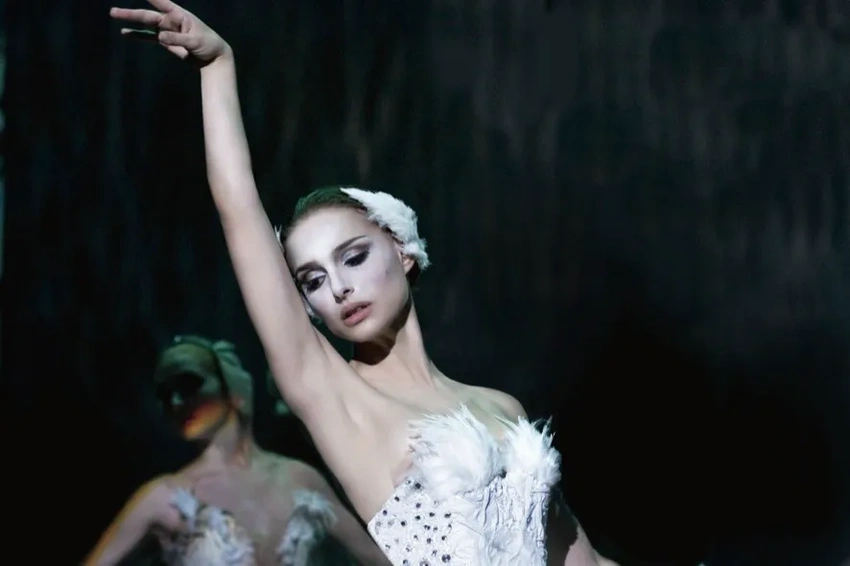
Darren Aronofsky’s Black Swan (2010) stages a familiar myth, Tchaikovsky’s Swan Lake and makes of it a psychodrama about the costs of immaculate control. At its centre is Nina Sayers, whose quest for the technically flawless White Swan collides with the erotic, ecstatic danger of the Black Swan she must also embody. The film’s formal and narrative architecture of mirrors, close-up choreography, fractured editing keeps us at the edge of embodiment: we watch a body striving to make itself pure and, in doing so, fracturing its identity.

Perfection as pathology
Nina’s obsession isn’t merely artistic; it reads as a pathology of perfection. Aronofsky composes sequences that equate the pursuit of flawless execution with literal self-harm: the dancer’s training becomes a ritual of bodily discipline in which control gradually slides into compulsion. Critics have long noticed how the film dramatises the paradox of “perfection”: the very striving to erase contingency produces the conditions for collapse, and only a crack allows the performance to be recognised as alive. This logic is theatrical but also recognisable: perfection becomes an aesthetic anaesthetic that numbs the self until the only remedy is transgression.
Mirrors, doubles and the uncanny
Formally, Black Swan is obsessed with doubling. Mirrors proliferate in bedrooms, in rehearsal studios, in backstage corridors and the reflexive surface is never merely decorative: it is the medium through which subjectivity splits. The film adapts Swan Lake’s Odette/Odile binary into a modern psychosis in which the White Swan’s prim, restrained composure must be fused with the Black Swan’s seductive abandon. Aronofsky stages these oppositions as cinematic motifs of light versus shadow, straight lines versus sinuous curves, restraint versus release and nearly every mise-en-scène decision amplifies the sense that Nina’s identity is under siege from an internal twin. This doubling is part fairy tale, part diagnostic lens; it borrows from a long cinematic tradition that links ballerinas to morbidity and hysteria.

Gendered labour and the cost of visibility
Read politically, the film interrogates the labour demands placed on female bodies in disciplines that require literal submission of flesh to an ideal. Ballet here functions as a hyperbolic laboratory for neoliberal aesthetics: bodies are calibrated, hours counted, and subjectivity economised in the service of an ideal image. Nina’s home life infantilised and policed by a mother who both cherishes and restrains her complements the studio’s disciplinary regime. The result is that the feminine ideal is not only an aspiration but a mode of containment; the Black Swan, when she arrives, is a liberation that is paid for in pain. Reviews and scholarly readings have long argued that ballet-on-film tends to connect female dancers with extremity in madness, possession, even death and Black Swan leans into that tradition as both critique and spectacle.
The politics of authenticity
Part of the film’s sting lies in how it complicates authenticity. Nina believes that technical purity will secure her authenticity; Aronofsky suggests the opposite. Authentic artistic presence, in the film’s logic, requires a relinquishing of control a dangerous surrender that risks the self. Critics read the film’s climax as an allegory of this paradox: the “perfect” performance emerges not from antiseptic control but from a willingness to be wounded, to allow the body’s contingency into the work. The film therefore stages artistic authenticity as a dangerous threshold rather than a tidy achievement.
Performance, spectacle and cultural appetite
Black Swan also asks uncomfortable questions about spectatorship. The audience in the film and by extension the cinema audience consumes not only the dancer’s art but her vulnerability. The final aria is both triumphant and monstrous: applause affirms the perfection achieved, but the cost is literal. The film implicates us in the economy that rewards such self-erasure. That implicature helps explain why the film ignited such debate on release: it reads like a cautionary myth for cultures that praise visible success while remaining indifferent to the labour behind it.
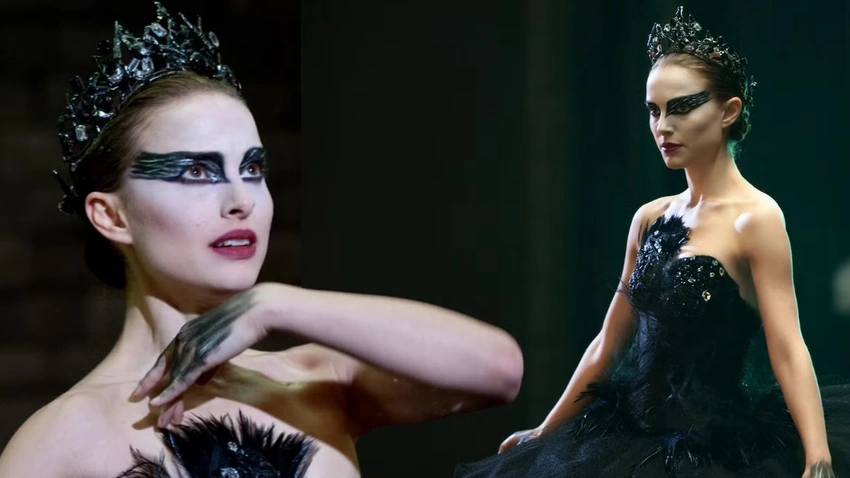
What keeps Black Swan alive in critical memory is its refusal to sentimentalise its heroine. Nina is not sanctified; she is complicated, pitiable and terrifying in equal measure. Aronofsky’s film is less a diatribe against ambition than an anatomisation of how aesthetic regimes shape subjectivity and how the desire to be “perfect” can become the apparatus that destroys the self it intends to enshrine. The movie leaves a residue: an image of perfection that is haunted, beautiful and irrevocably cracked.
#BlackSwan #DarrenAronofsky #NinaSayers #FilmAnalysis #Cinema #FilmReview #MovieReview
