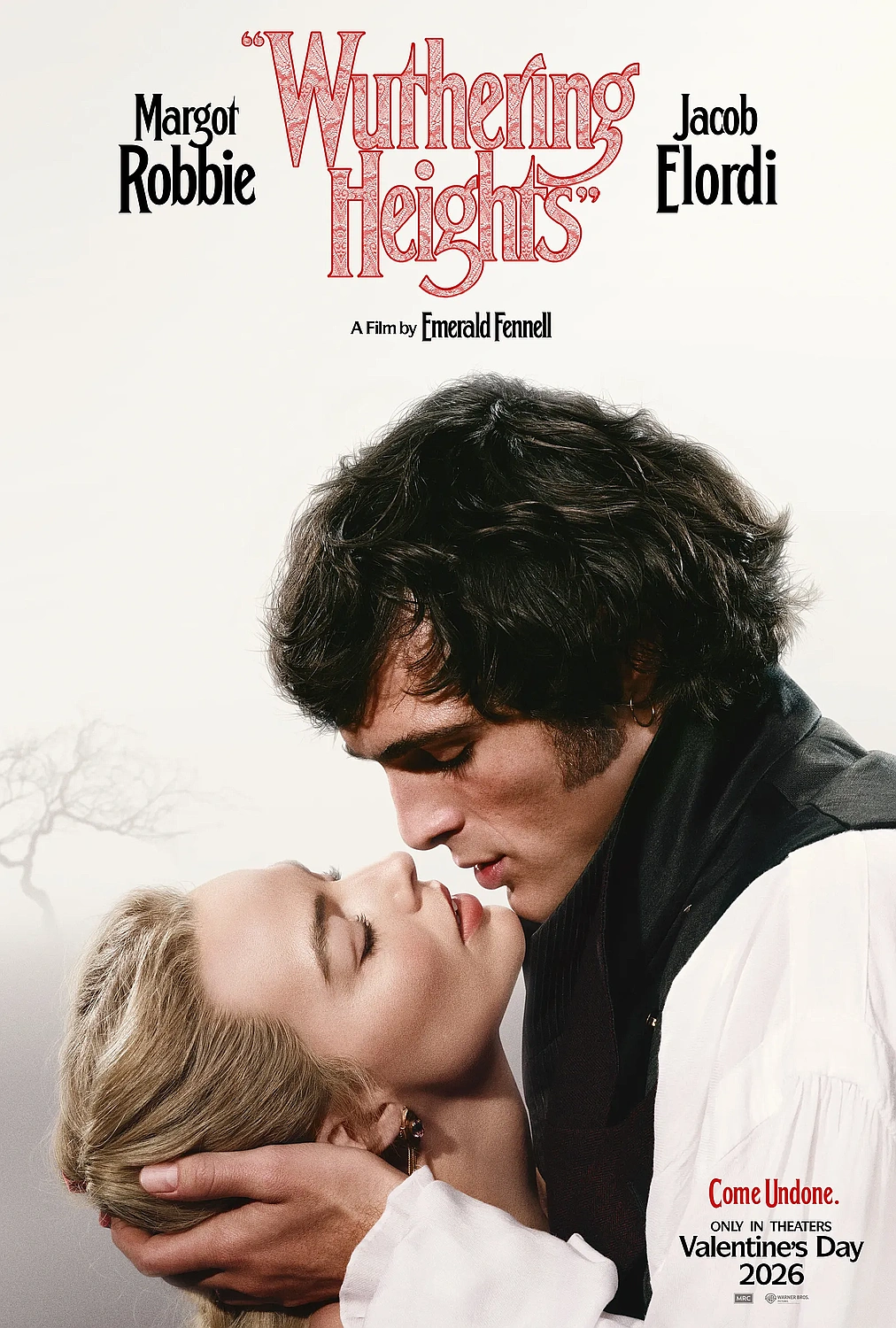

Opening the shutters on a film that promised to unsettle, Emerald Fennell’s Wuthering Heights feels less like a recovered howl from the moors and more like a curated shock piece. The film is visually confident and consciously provocative, but several choices strip Emily Brontë’s novel of its structural and ethical tensions rather than translate them for a contemporary audience.
Style over substance
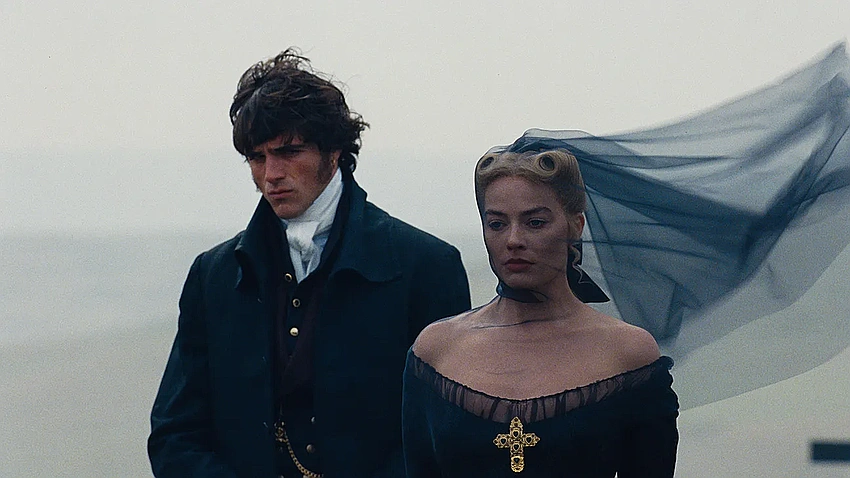
Fennell’s language is unmistakeable: angled camera, burst editing and a constant theatricality that insists on itself. This directorial bravado produces striking images, but it too often substitutes surface sensation for emotional architecture. The novel’s cruelty and generational rot are conveyed through narrative layering and the slow build of atmosphere; the film collapses that patient accumulation into a series of sensory set-pieces. The consequence is a version of the story that reads as if it were written in italics, everything emphasised, nothing allowed to settle.
The erasure of structural critique
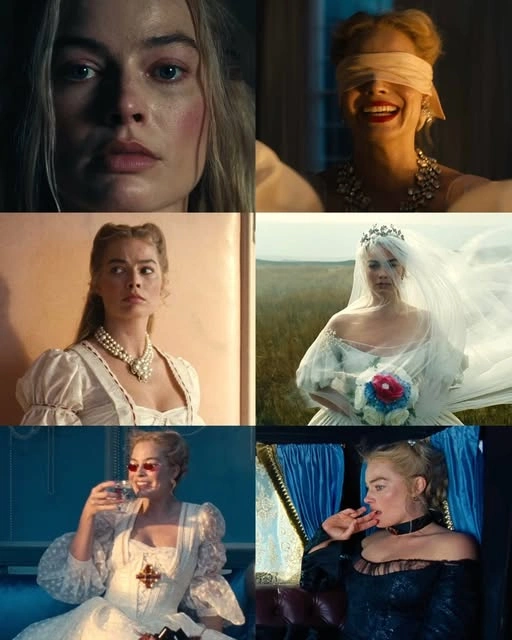
One of the most persistent strengths of Wuthering Heights is its interrogation of class and the social liminality of Heathcliff. Emily Brontë’s Heathcliff arrives as an outsider whose ambiguous origins haunt the social order of the moors; the novel uses that unmoored status to expose the chasms of inheritance, ownership and racialised othering. By reframing the narrative primarily as a feverish sexual romance, the film risks excising the very social critique that made the original bizarre and subversive. Turning the book into a corset-heaving melodrama can feel like converting a knife into a pendant: alluring, but blunt.
Problematic representational choices
Casting and representation have become unavoidable axes of discussion. The character of Heathcliff has been read, by many scholars, as not simply a local foundling but as an imbricated figure whose difference signals questions about race and colonial afterlives. The decision to cast Jacob Elordi, a white actor in the role reopened the long argument about whether adaptations can or should erase that otherness. That erasure is not a mere historical quibble; it alters the relational dynamics between characters and removes a layer of social tension fundamental to the novel’s critique.
The fetishisation of abuse
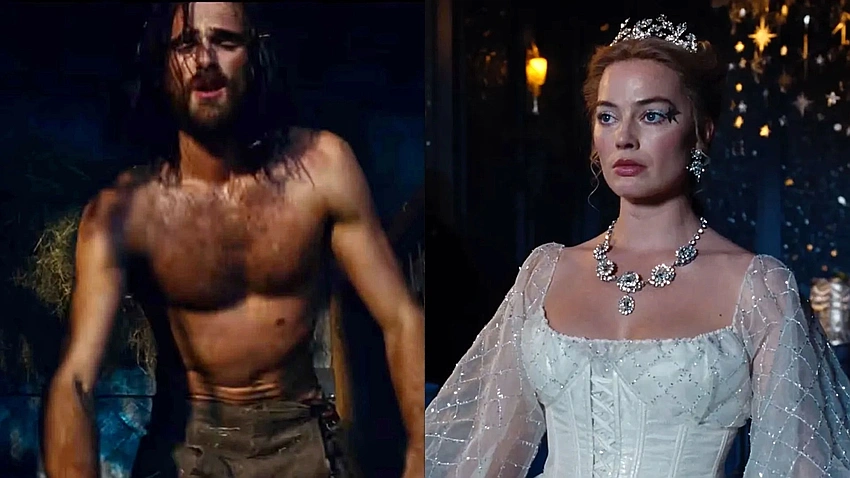
Perhaps the film’s most ethically fraught move is its treatment of sexualised violence. Scenes remodel what, in the book, are traumatic encounters into stylised displays of erotic powerplay. One sequence in particular which has been widely reported and discussed reframes an abusive relationship as a consensual BDSM tableau. The reconfiguration of abuse into spectacle risks normalising, aestheticising or romanticising dynamics that Brontë’s novel frames as generational harm. This is not a mere matter of taste: it’s an ethical problem about how narratives of power and violation are represented on screen and consumed by audiences.
Soundtrack and tone: expressive, uneven
The soundtrack, created in collaboration with contemporary pop musicians, does much of the heavy lifting in establishing mood. It’s an intriguing choice to let modern orchestration and pop textures stand in for the novel’s howling moors and in moments it enriches the atmosphere. Yet the soundtrack also accentuates the film’s schizophrenia: a story that can’t decide whether it wants to be a period tragedy, a fetishised romance, or arthouse provocation. When musical affect becomes the primary vehicle of feeling, the internal logic of character motivation can suffer.
What is lost when an adaptation becomes an auteur’s playground
Adaptation is always an act of translation, and there is a legitimate case to be made for radical re-imaginings. But translation also asks for fidelity to certain formal or ethical cores: if a text's central tensions here, class, race, and structural cruelty are scaffolding its meaning, then reworking the ornament without addressing the scaffold risks turning a living argument into a collectible. The film often feels less like an interpretation and more like a sampling: memorable clips that look and sound distinctive but no longer argue with the original’s complexities.
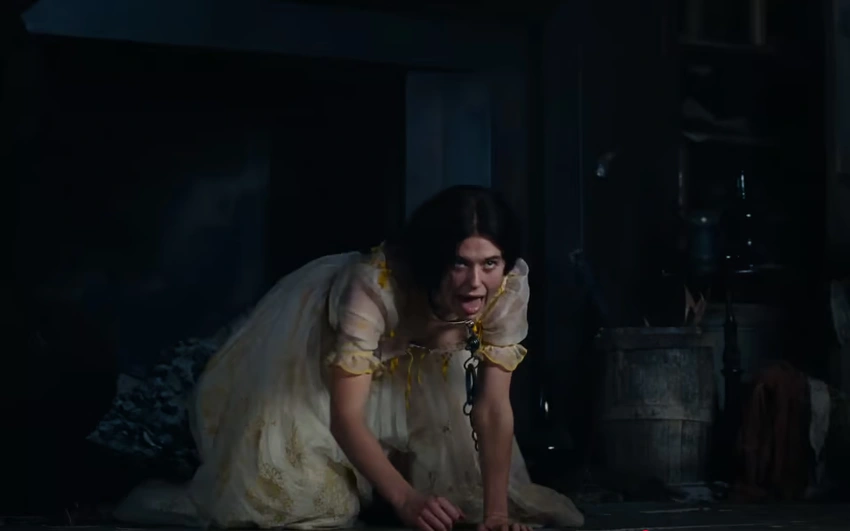
The controversy around Fennell’s version is not simply about one director’s vision. It’s a symptom of how adaptations today negotiate legacies of race, violence and gender politics in an instant-culture economy that rewards provocation. When canonical works are reimagined, the choices made matter because they reframe what new audiences learn from those stories. If Wuthering Heights is repackaged primarily as erotic spectacle, then its lessons about social marginality, inheritance and the consequences of cruel attachment are at risk of being obscured rather than sharpened.
There is energy in Fennell’s film: an appetite for the extreme, a hunger to shock. Those qualities can yield powerful cinema when tethered to careful ethical and narrative work. In this instance, the tether frays. The result is an adaptation that will animate fierce debate precisely because it is so eager to astonish and because it also, in key ways, misunderstands the structural heart of the book it claims to love.
#WutheringHeights #EmeraldFennell #FilmReview #Cinephile #MovieAdaptation #MovieReview
