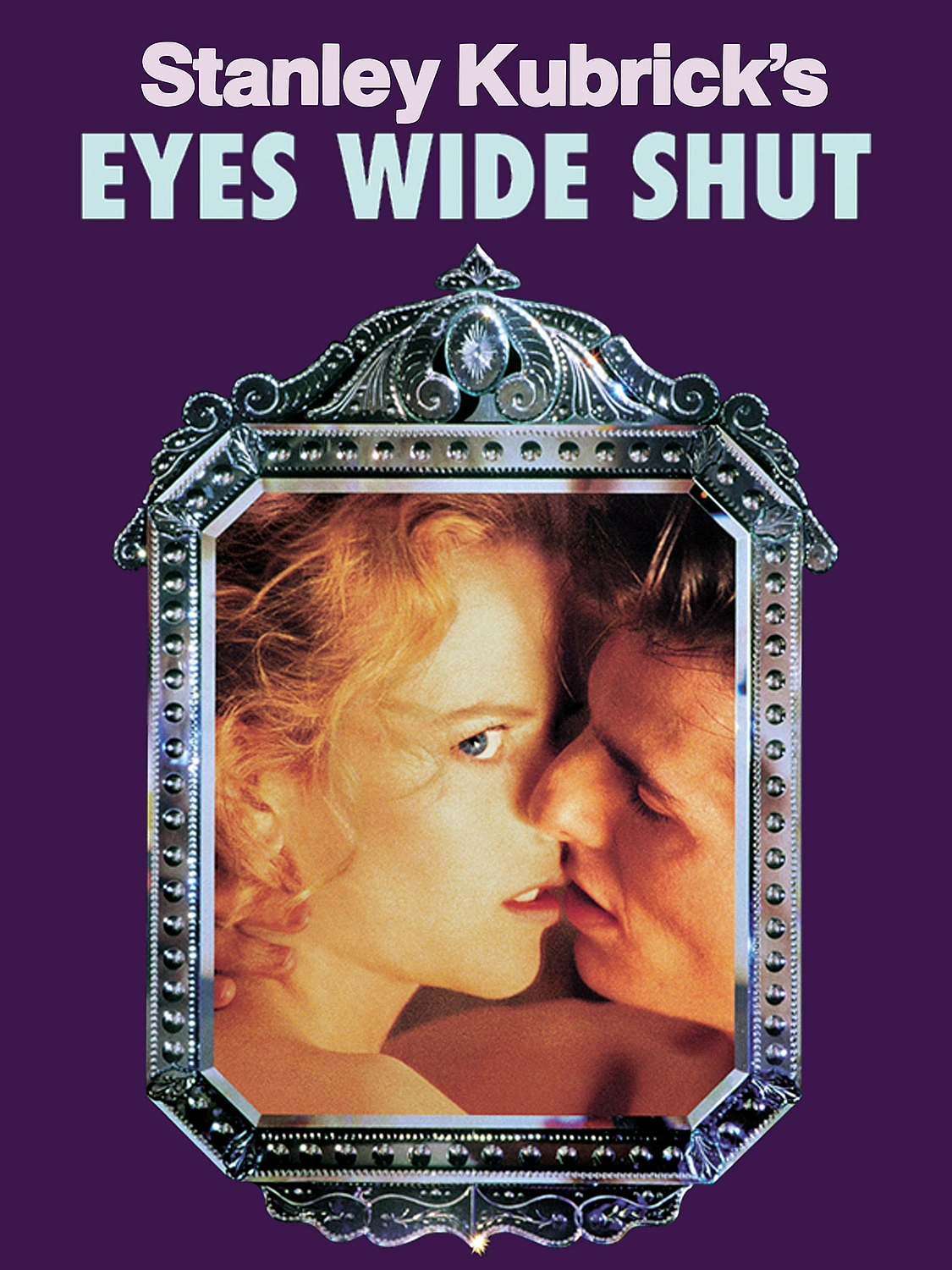

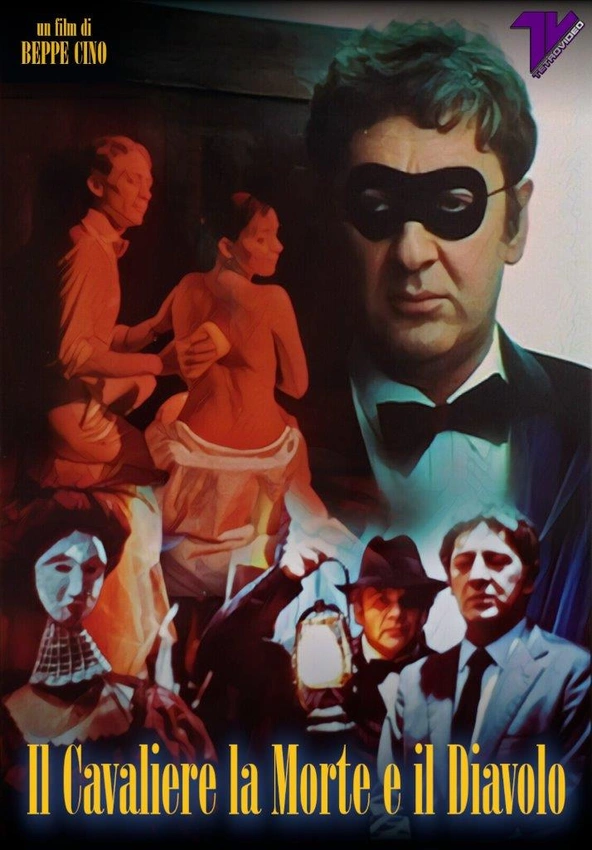
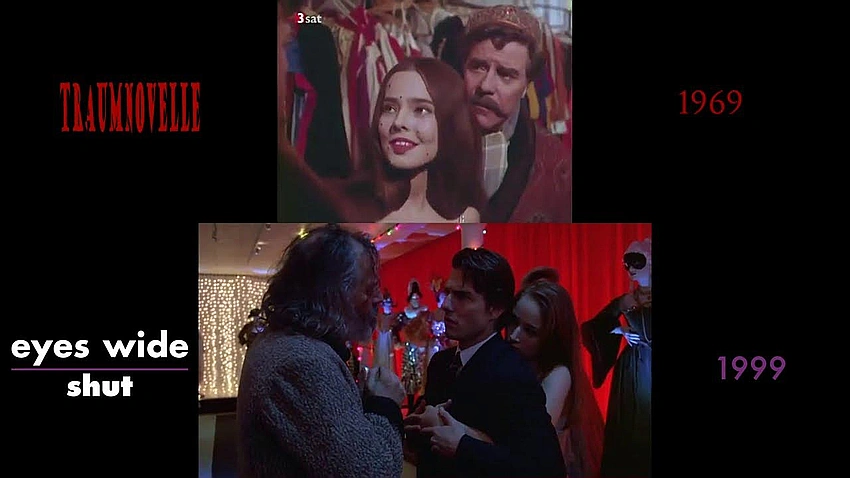
There is something quietly radical about how Stanley Kubrick’s final film refuses the language of novelty. Eyes Wide Shut is not an invention so much as a transposition: a late-twentieth-century New York relocation of a European modernist anxiety. Its narrative spine comes from Traumnovelle (often translated as Dream Story) by Arthur Schnitzler which is a text steeped in fin-de-siècle Vienna’s fascination with sexuality, repression, and the instability of bourgeois marriage. There have been German-language film adaptations of Schnitzler’s story before Kubrick, but Eyes Wide Shut is best understood less as a remake of any single film version and more as Kubrick’s long-gestating dialogue with Schnitzler’s psychological world.
From Viennese interiors to Manhattan nights
Schnitzler’s Traumnovelle follows a doctor who, after hearing his wife confess to a past erotic fantasy, wanders into a nocturnal landscape of temptation, humiliation, and near-disaster. Kubrick preserves this skeletal structure almost intact. What changes is cultural texture.
Early twentieth-century Vienna becomes late-capitalist Manhattan. The waltz-era drawing room becomes the softly glowing apartment. Yet the psychic geography remains strikingly similar. Both works imagine the city as a dream-machine: a space where suppressed desires briefly surface before being reburied under routine.
This continuity matters. It situates Eyes Wide Shut not primarily within late-1990s erotic thriller cycles, but within European modernism’s longer project of dismantling the myth of stable bourgeois intimacy.
Marriage as a psychological contract
One of the most Schnitzlerian aspects of the film is its refusal to portray marriage as either sanctuary or prison. Instead, marriage appears as a negotiated fiction of a story which two people tell each other in order to survive their own capacity for wanting.
Alice’s confession about a long-ago fantasy detonates the couple’s shared narrative. Nothing “happens” in an external sense, but everything changes internally. This emphasis on psychic rupture rather than physical infidelity aligns closely with Schnitzler’s original emphasis on imagination as the true site of danger.
Kubrick’s camera lingers on faces after words are spoken. The damage is not in action but in aftermath.
The mask as modernist device
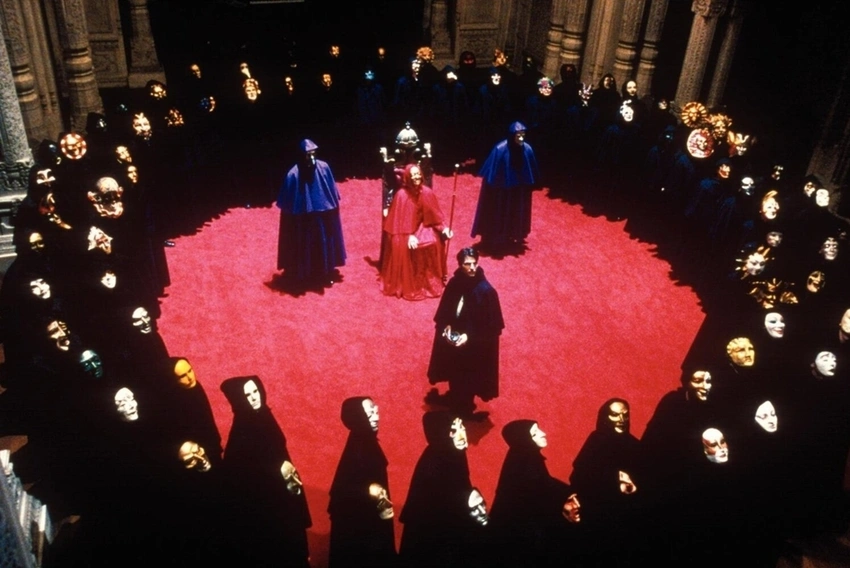
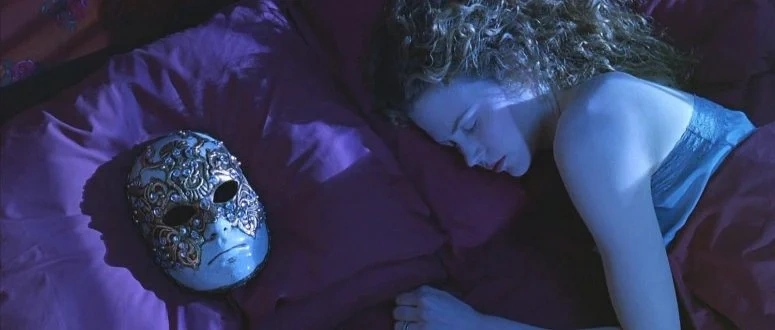
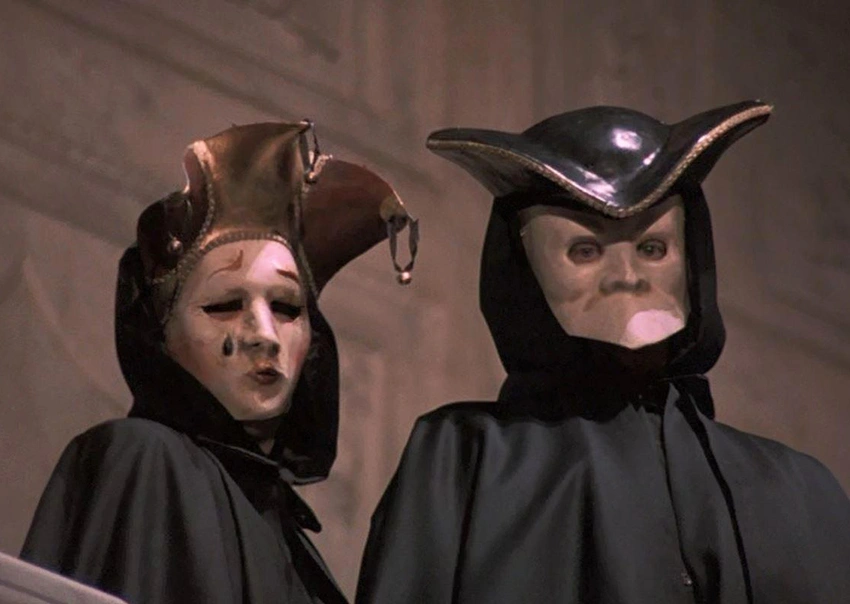
The famous masked ritual is often discussed as spectacle, but in Schnitzler’s story the masked gathering already functions as symbolic compression: anonymity allows desire to detach from identity. Kubrick intensifies this by transforming the scene into near-operatic choreography.
Masks here are not simply erotic props; they are philosophical tools. They stage a question central to both Schnitzler and Kubrick: if desire is anonymous, what does fidelity even mean?
The ritual feels less like a secret society and more like an abstract model of social life itself — hierarchies, rules, punishments, all draped in aesthetic splendour.
Looking as a moral problem
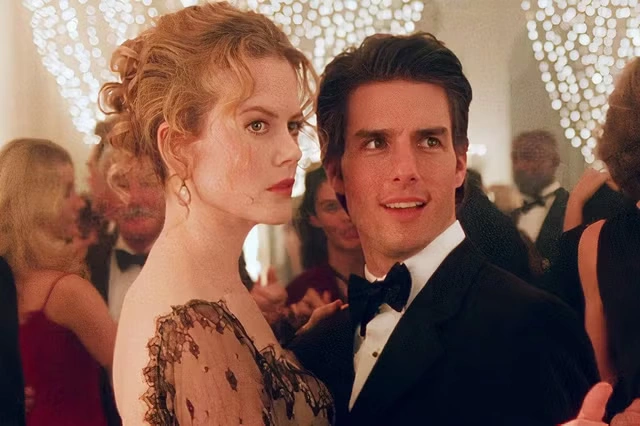
Both Traumnovelle and Eyes Wide Shut are obsessed with looking. Windows, doorways, mirrors, and corridors structure the narrative. Bill is perpetually on the threshold of spaces he does not belong to.
Kubrick transforms Schnitzler’s interior monologue into visual grammar. Long tracking shots replace literary introspection. The viewer moves with Bill, sharing his curiosity, his dread, and his impotence.
This is where the film becomes quietly accusatory. We are not neutral observers. We, too, are wandering into rooms we should not enter.
Sexuality without liberation
A common misunderstanding is to treat the film as transgressive or liberatory. In fact, its worldview is profoundly pessimistic.
Sex in Eyes Wide Shut rarely appears joyous. It is transactional, hierarchical, or haunted. Schnitzler’s modernist scepticism about sexual freedom and his belief that desire does not automatically produce honesty persists in Kubrick’s adaptation.
What survives across the century is the sense that modern subjects are not repressed innocents but confused strategists, constantly managing what they reveal and conceal.
The uncanny calm of Kubrick’s late style
Kubrick’s late-period aesthetic of symmetrical compositions, controlled pacing, emotionally restrained performances suits Schnitzler’s material with eerie precision. Nothing is rushed. Nothing is allowed to explode.
This restraint creates unease. Emotional devastation occurs at conversational volume.
Knowing that Kubrick had been developing an adaptation of Traumnovelle for decades before finally making Eyes Wide Shut reframes the film as a culmination rather than a late-career experiment. It feels less like a farewell and more like a closing bracket.
Reception and reevaluation
Upon release, the film was often reduced to controversy: stars, nudity, rumours of hidden meanings. Over time, critical attention has shifted toward its literary lineage and formal austerity.
Seen alongside Schnitzler, the film becomes legible as modernism in translation — not nostalgic, not ironic, but persistently unresolved.
Its power lies in refusing to settle whether Bill’s journey teaches him anything at all.
A dream that doesn’t dissolve
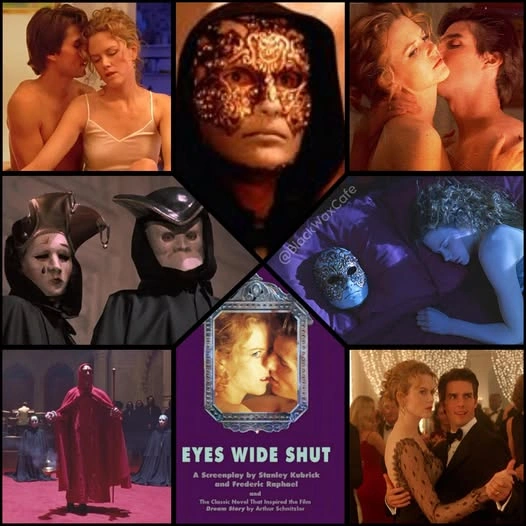
Eyes Wide Shut inherits Schnitzler’s most unsettling idea: that intimacy is never fully transparent, even between people who share a bed.
Rather than offering solutions, the film offers a structure for thinking — a dream logic in which desire, fear, loyalty, and shame circulate without ever reaching equilibrium.
As a pop culture object, it is frequently mythologised. As a text, it is something more modest and more devastating: a modernist study of how little we know about the people we love, and how carefully we arrange not to know.
#EyesWideShut #Kubrick #Schnitzler #DreamStory #FilmAnalysis #MovieReview #FilmReview
