
The Case for the Cosmic Outcasts: Finding Life in the Dark
For decades, our search for extraterrestrial life has been obsessed with the light. We look for stars like our sun and Goldilocks planets that sit at just the right distance to avoid freezing or frying. But what if we have been looking at the map all wrong?
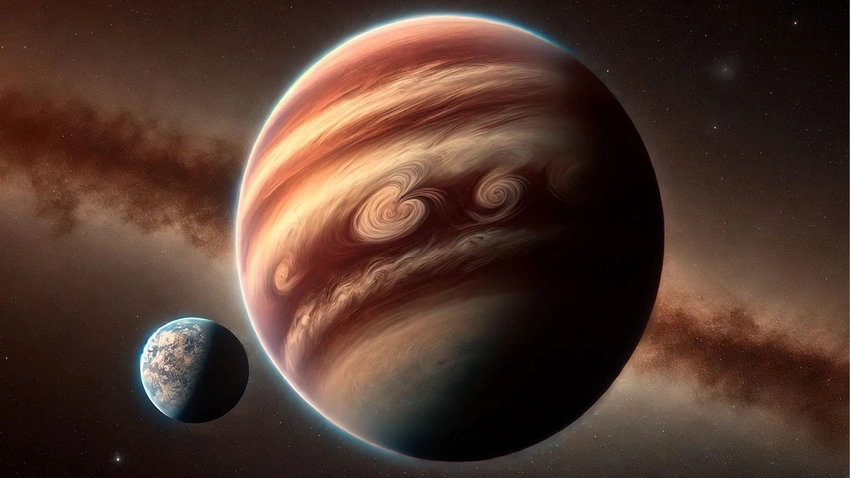
Recent scientific models suggest that the most stable habitats in the universe might not be orbiting stars at all. Instead, they could be found on moons circling rogue planets. These are massive worlds that were kicked out of their original solar systems by gravitational chaos and now drift through the cold, lonely void of interstellar space.
A Billion-Year Warmth
It sounds like science fiction, but the math holds up. An Earth-sized moon orbiting a massive, Jupiter-like rogue planet can generate enough internal heat through gravitational friction to keep liquid water on its surface for over four billion years. To put that in perspective, that is roughly the entire history of life on Earth. These moons do not need a sun to stay warm; they just need the tug of their parent planet to keep their cores active and their oceans liquid.
Why We Should Care
If the cradle of life does not require a star, the potential for biology in our galaxy explodes. We are no longer limited to the tiny circles around stars. Instead, the vast, dark spaces between the suns could be teeming with life. This realization changes everything. It means the universe might be far more crowded than we ever imagined, hiding life in the places we least expected to find it.
However, finding these worlds is incredibly difficult. Because they do not emit their own light and are not tethered to a bright star, they are nearly invisible to our current telescopes. This raises a vital question for the scientific community: should we be pouring more of our limited funding into the search for these cosmic nomads?
Time to Shift Our Focus
Investing in the technology to detect and study rogue moons would be a gamble, but the payoff could be the greatest discovery in human history. We are currently playing a game of cosmic hide and seek where we only look under the streetlights. It is time we started looking in the shadows.
If we want to know if we are truly alone, we cannot keep ignoring the dark majority of the universe. The next great frontier for humanity might not be a distant sun, but a lonely moon drifting through the deep silence of space. We need to fund the missions that can see the invisible.
