
The Rise of the AI-Assisted Beginner
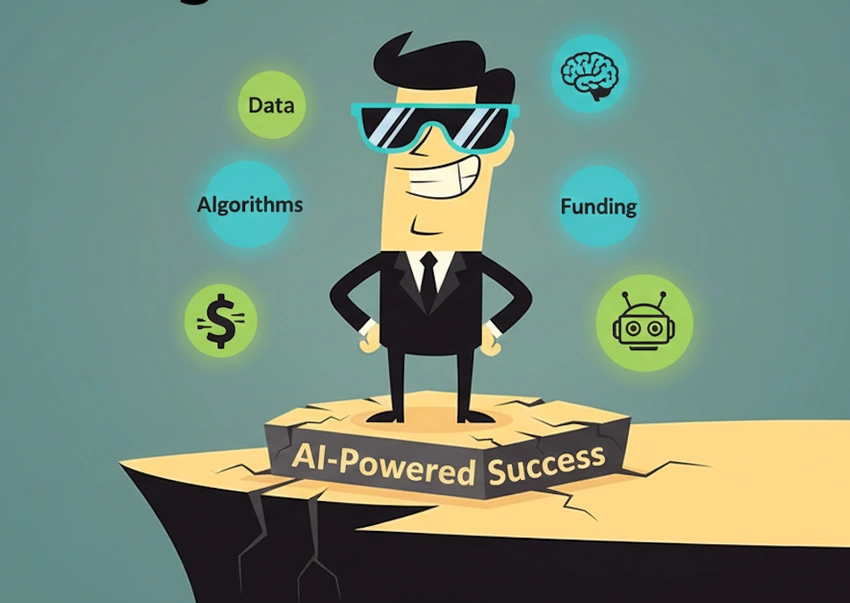
There is a strange confidence spreading among people who are entering tech for the first time. They believe they are more skilled than they are, simply because AI fills in the gaps for them. When everything looks polished in seconds, it becomes easy to assume you know why it works. The illusion of competence grows faster than the competence itself.
I have been watching this happen in founders, interns, freelancers, and even people switching careers. They start strong, look impressive, and then hit a wall they never saw coming. The moment the problem requires real reasoning, the confidence cracks. AI removes friction, but friction is what teaches you how to think.

When the Shortcut Becomes the Path
A few months ago, I mentored a young founder who built a full-stack demo using AI prompts. His pitch was confident and he genuinely believed he understood the system. But when a developer at the meeting asked a small technical question, his face froze. He later told me he realized he had never actually learned anything. He had only assembled parts he didn’t understand.
This is happening everywhere. People learn through shortcuts, then mistake the shortcut for mastery. It is not their fault. AI tools are designed to make everything feel effortless. The problem is that effort creates comprehension. Without it, people struggle to handle depth, edge cases, strategy, or complexity.
The Confidence Bubble Inside Tech
There is a research insight I keep coming back to. A behavioral scientist once said, “People don’t judge their skills by accuracy. They judge them by ease.” That line describes the AI age perfectly. When the work feels easy, people assume they are good at it. When the work loads instantly, people assume they understand it.
This overconfidence is becoming a real barrier to entry. It creates unrealistic expectations, shallow learning, and fragile careers. People end up in jobs or startups that they cannot sustain because they skipped the hard parts that build intuition.
My Own Worst Moment With Overconfidence
I experienced this firsthand too. I once used AI to generate code using a new library I barely understood. It looked perfect. Impressive. I convinced myself I had “learned” the library simply by reading the AI output - it seemed better than reading docs.
A few hours later, something broke. I had no idea how to fix it, and I realized I had built a house I could not maintain. I had speed without comprehension.
That failure forced me to slow down, read the docs and error messages properly, and stop confusing polished-looking output with actual deployable code.
Where the Real Barrier Lies
The real barrier to entry is no longer technical access. Anyone can write code, design a homepage, or build a prototype. The barrier is depth. Understanding something well enough to handle when it breaks. Knowing why something works instead of just knowing how to generate it. Being mentally prepared for the complexity behind the polished surface.
AI lowers the threshold to start, but it raises the expectations for what comes after.
The gap between appearance and ability is widening. People are walking into rooms they are not equipped to stay in.
A Better Way Forward
There is nothing wrong with using AI to learn or build. It is an amazing tool that expands creativity and speed. The danger appears when people stop being curious. The best founders and builders I know use AI as a partner, not a replacement. They still read, experiment, break things, and ask others for help.
The next era of tech will reward people who combine AI speed with real understanding. It will favor those who stay humble enough to learn and confident enough to try. Overconfidence collapses when the first big problem shows up, but genuine curiosity holds up better than any prompt.
The goal is not to avoid AI. The goal is to avoid fooling yourself.
