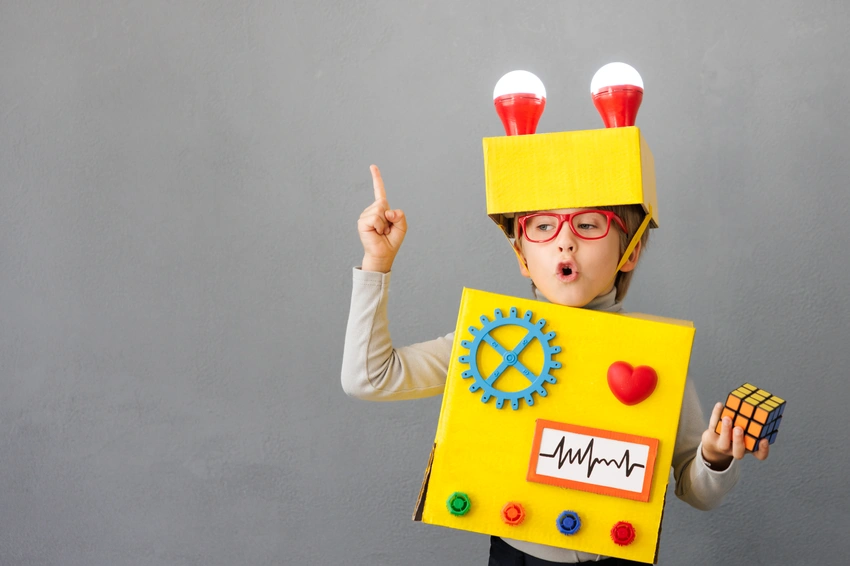

As a psychology student and a parent, I often think about how quickly our children’s world is changing. When we were growing up, play meant building pillow forts, playing hide and seek, or getting messy in the garden.
Now, children talk to AI assistants, use apps to learn ABCs, and ask ChatGPT to write bedtime stories. You walk into your kid’s room and find them deep in conversation, not with a friend, not with a toy, but with Alexa. They’re asking her how to spell “elephant,” what dolphins eat, and whether aliens are real. It's part cute part creepy. Modern parenting is where AI is the invisible sibling in the room, always listening, always answering.
Moreover, AI is especially changing how learning itself happens - instant answers without any space to think for yourself, help for each bit of homework and a "connection" with an entity even adults don't fully understand yet... there are a lot of new things to consider.
So the big question is: Do our kids deserve an AI-free childhood?
Let’s look at the yes side first.
The Case for Hitting Pause on the Bots
There’s a certain magic in how we grew up. Messy art tables. Muddy knees. Playing outside until the street lights came on. Most of us didn’t have devices that could “talk back” until our twenties...
Many experts and parents believe childhood should be filled with real experiences, playing outside, making friends face to face, and learning through trial and error. Add to that the rising screen addiction, the loss of attention spans, and the fact that kids are now skipping the “Why?” phase in favor of “Ask ChatGPT,” and it’s enough to make any parent panic.
AI can sometimes make things too easy. Kids may lose patience, creativity, and even basic social skills if they grow up always having instant answers and screen-based fun. Do kids need instant answers? I think not.
We also can’t ignore the elephant in the (digital) room: AI isn’t neutral. It reflects data that isn’t always age-appropriate, culturally sensitive, or emotionally intelligent. Do we really want an algorithm shaping our kids' worldview?
There’s also the worry about data privacy, emotional detachment, and addiction to screens. Children need boredom to discover imagination. They need silence to build self-awareness. Some fear that too much AI might replace these quiet, important parts of growing up.
But Wait, AI Isn’t the Villain Here
The other side says AI is simply a tool, like a book, a bicycle, or a microscope. When used mindfully, AI can support a child’s learning, spark curiosity, and even ease the workload for parents. Not every family has the time or resources to teach everything at home. An AI tutor or helper can step in.
AI, when used intentionally, can be a powerful tool. Think learning apps that adapt to your child’s pace, or voice assistants that help neurodiverse kids communicate more easily. For busy parents juggling 9-5 jobs and after-school chaos, AI can offer relief, not just distraction. It can also help parents stay organized or mentally supported, if used in healthy ways.
Plus, let’s admit it: the world our kids are growing up in is not the one we grew up in. It's more connected, more complex, and yes, more AI-driven. They need to understand technology to be able to use it better. Shielding them completely may do more harm than good. What they do need is guidance: how to question what AI tells them, how to think critically, and how to stay human in a world that keeps getting smarter.
So what’s the right answer? Maybe it’s not about banning AI or blindly embracing it. Maybe it’s about balance. Our kids don’t need an AI-free childhood. They need a human-first one. Where technology helps, not replaces. Where hugs come before notifications. Where the real world feels just as exciting as the digital one.
One where screen time comes with real-world balance. Where bedtime stories still happen (even if ChatGPT helped you write one), and where the emotional intelligence of a parent still beats any chatbot’s simulated empathy.
Let’s give our kids eye contact, patience, and offline play; but also teach them to navigate the tools of their time, so when they do explore the AI world, they know who they are beyond the screen... After all, being human is still the best app we can give them.
